Showing posts with label Dental Procedures. Show all posts

Saturday, November 28, 2009

Tooth Extraction

What is Tooth Extraction?
 
Tooth Extractionmeans removal of a tooth from its socket.

Precautions

In some situations, tooth extractions may need to be postponed temporarily. These situations include:
Infection that has progressed from the tooth into the bone. Infections may make anesthesia difficult. They can be treated with antibiotics before the tooth is extracted.

The patient's use of drugs that thin the blood (anticoagulants). These medications include warfarin (Coumadin) and aspirin. The patient should stop using these medications for three days prior to extraction.

Patients who have had any of the following procedures in the previous six months: heart valve replacement, open heart surgery, prosthetic joint replacement. These patients may be given antibiotics to reduce the risk of bacterial infection.

Patient who have high blood sugar level. Because,in these cases special precaution is necessary as the healing would be very slower.

Benefits
An extraction is sometimes the only way to treat acute dental pain, particularly when a root-filling would be ineffective.

Tooth Extraction Procedure


1. First your dentist will anaesthelized the area and tooth.
2. After your tooth and surrounding structure become numb, he will reflect the gum area surrounding tooth.
3. If the tooth is firm, dentist will use elevator and mobilise the tooth.
4. Then he uses forceps to hold the tooth and use appropriate force to remove it from the socket.
5. Then he will press the gums from both sides , put a gauze and tell youn to bite on it for at least 30 minutes.
6. But sometimes cases might be get complicated and a surgical attempt is needed.

Post Operative care

After the extraction, the initial healing period typically takes from one to two weeks, and some swelling and residual bleeding should be expected in the next 24 hours.

It is important not to dislodge the blood clot that forms on the wound.  Occasionally, this clot can break down leaving what is known as a dry socket.   This can cause  temporary pain and discomfort that will subside as the socket heals through a secondary healing process.

Proper care of the area will affect the healing process.  Smoking and allowing food particles to pack into the socket should be avoided; in addition, it is important to take any medication that the dentist prescribes.Eventually, new bone and gum tissue will grow into the gap left by the extraction.

Consequences of tooth Extraction

Having a missing tooth can lead to several problems such as shifting teeth, difficulty chewing, and malocclusion.  Often a dentist will attempt to restore the area with an implant, fixed bridge, or a denture.

Dental Cavity Filling


W

hat is Dental Cavity Filling?
A Dental Cavity Filling is a way to restore a tooth damaged by decay back to its normal function and shape. When a dentist gives you a filling, he or she first removes the decayed tooth material, cleans the affected area, and then fills the cleaned out cavity with a filling material.

By closing off spaces where bacteria can enter, a filling also helps prevent further decay. Materials used for fillings include gold, porcelain, a composite resin (tooth-colored fillings), and an amalgam (an alloy of mercury, silver, copper, tin and sometimes zinc).A tooth is needed to be restored (filled) if there is a cavity, and fracture. Filling materials are of different types and advanced materials are introduced every year.

Most of us know about silver filling ( Amalgam) which has been used since a very long time.Now a days, tooth coloured fillings are getting more popular.

What are the filling materials available?

1. Silver Amalgam  
2. Glass lonover cement  
3. Miracle mix   
4. Composites


Filling Material 1. White 2. Silver
 
Which Type of Filling is Best?
No one type of filling is best for everyone. What's right for you will be determined by the extent of the repair, whether you have allergies to certain materials, where in your mouth the filling is needed, and the cost.

How identify the need for dental Cavity Filling?
Only your dentist can detect whether you have a cavity that needs to be filled. During a checkup, your dentist will use a small mirror to examine the surfaces of each tooth.

What Happens When You get a Filling?

If your dentist decides to fill a cavity, he will first remove the decay and clean the affected area. The cleaned-out cavity will then be filled with any of the variety of materials described above.

How long will my filling last?

It all depends on the type of tooth cavity, type of material used for the cavity, your chewing habits. So, definte time span can not be given. Some type of filling in a same type of cavity may last for different time period.


Dentures


W

hat is a Denture?
A denture is a removable replacement for missing teeth and adjacent tissues. It is made of acrylic resin, sometimes in combination with various metals. There are two types of dentures: complete dentures and partial dentures. Complete dentures replace all the teeth in either the upper or lower jaw. Partial denture fills in the spaces created by missing teeth and prevents other teeth from changing position.
 

Complete Denture
 
Partial Denture
 
Complete and Partial Denture

Complete dentures are either "conventional" or "immediate." A conventional denture is placed in the mouth about a month after all the teeth are removed to allow for proper healing, whereas an immediate denture is placed as soon as the teeth are removed. Complete dentures are held in place through suction, or the close adaptation of the denture base to the surface area of your tissues. The drawback behind an immediate denture is that it may require more adjustments after the healing has taken place.

One thing to consider while putting on a denture is a constatnt care that it will need. Dentures should be cleaned regularly. It can be easily taken off and cleaned with a brush and water. Failure to clean dentures regularly might lead to poor oral hygiene.

Dentures will feel little uncomfortable in the beginning. One will normally get used to it in few weeks. Chewing will be uncomfortable at first - try starting off with soft foods cut into smaller pieces. It can take several visits to the dentist in order to properly fit a denture.

Benefits
  1. Dentures can improve the way you look, bite, chew and speak
  2. They are made in such a way that they exactly fit in your mouth and thus look more natural.
  3. They put the jaw back into its natural biting position after back teeth have been lost, 
  4. Loss of tooth causes the resorption of the jaw bone,which makes your face more aged.Dentures help to prevent the resorption of the bone loss and restore the shape of the face.
  5. They help to protect any natural teeth from wear and tear. Without dentures to fill the gaps, the natural teeth may move or tilt, stopping your teeth biting together properly.

Dental Crowns


W

hat is Crown?
A crown completely covers a weak tooth above the gum line and protects it. Crowns are made of metal or porcelain, or porcelain with metal inside for strength.


What are the benefits?
A crown is strong and can look and feel exactly like a natural tooth. The colour and shape can be matched to your own teeth.
Depending on the strength of the tooth underneath, a crown can last for many years if you look after your mouth and teeth and the crown is not accidentally damaged.
Crowns can also improve the appearance of misshapen or discoloured teeth.
What dentist do?
  1. If your tooth is vital (not dead/not RCT treated) then your dentist will give you anaesthesia to releiser any kind of  pain and sensitivity while tooth preparation.
  2. Then your dentist will cut your tooth which is also known as tooth preparation. He will reduce height, breadth of your existing tooth so that a crown can be placed over it.
  3. Then he will make an impression of the reduced tooth and send that to the lab to make a crown. Then he will note the shade  (colour) of your tooth.
  4. Then your dentist will fit a temporary crown over the tooth so that you'll not feel any sensation till the permanent crown is fitted on to the tooth.
  5. Then you will be recalled for second visit after permanent crown is ready.Then your dentist will remove the temporary crown and place the permanent crown and fit with the help of a special kind of cement which binds the tooth of the crown.
What is difference between temporary crown and permanent crown?
Temporary crown is made by a material which can not be used for a long time as it can not bear masticatory forces. It is normally made of acrylic material and can be prepared in a clinic. The main motive of this crown is to protect your reduced tooth by external environment as stimuli, hot and cold, pain, forces, bacteria etc.
While permanent crown is made up of porcelain or metal which has high strength and can be used for a long time. It has to be made in the lab. So can not be delivered immediately.
What happens if any permanent crown falls off?
It is not so natural that once fitted, it will not come out. If so there is nothing to worry. Visit then dentist immediately along with the crown. Dentist will see the coordination of your tooth and crown and place it back in place with not much effort. 
 

Restorative Dentistry

Restoritive Dentistry is indicated when teeth must be restored to thie original structure by the use of direct and indirect restorative materials. Specific conditions taht determine the need for restorative dentistry include:
  1.    Inital or recurring decay(cavities)
  2.    Replacement or failed restorations
  3.    Abrasion or wearing away of tooth structure
  4.    Erosion of tooth structure
Ar you suffering from misshaped, broken, chipped, crooked or lost teeth? At Apple dental Zone (Multi Specialty dental Clinic) will help out people who are suffering from these conditions. There are various restorative dentistry procedures which are successfully done at our clinic. The treatment method and option depends on the kind of the dental problem an individual is suffering from. Some of the procedures that we undertake for our patients are mentioned below:
 

Single Crown


Bridge


Veneers

Filling
  1. Dental Cavity Filling: Poor dental hygiene can result in tooth decay, also known as cavities.  The material used to replace an area of the tooth where decay has been removed and a cavity remains.The two most common types of fillings are Amalgam (silver) and composite (tooth colored). Slver (Amalgam) filling material contains about 50% mercury and 50% of various other metals. The composite filling material contains acrylic and glass particles, no mercury. With attributes to both amalgam and composite fillings, the pros and cons can help you decide what type of filling is best for you.
  2. Dental Crowns: when a tooth is severely damaged or decayed, dental crowns act as a protective cover, strengthening the tooth and reinforcing the jaw.
  3. Veneers: Veneers are thin wafer like substance which can be used for teeth restoration. Veneers can effectively correct broken, damaged, crooked, misaligned and misshapen teeth. There are two types of veneers: 1. Porcelain Veneer (Direct) and 2. Composite Veneer (Direct) .Teeth’s whitening is also possible with the use of porcelain veneers. We use very thin layers on our patient’s teeth so that they do not feel their teeth are bulky at all.   
  4. Dental Bridges: for one or more missing teeth, dental bridges literally "bridge the gap" between remaining teeth, stabilizing the jaw by surrounding those teeth with attractive crowns.
  5. Dentures: replacing one or more teeth is easier than ever before with the multitude of denture alternatives available to patients. Dentures are now more comfortable and affordable than ever before.

Orthodontics


Types of teeth

W
hat is Orthodontic Treatment?

You might have seen people wearing braces or wires on their teeth. That is infact that person is going through orthodontic treatment. Teeth in irregular position lead to an undesirable apperance, and smile. Therefore public with such problem seek for orthodontic treatment so that their apperance can be improved. Orthodontic treatment helps in improving the oral health condition and facial bone development too.

Orthodontic treatment not only improves the look of your teeth, it may prevent bigger dental problems from developing later in life. Orthodontics is the science of adjusting the position of mis-aligned teeth by the use of  'braces.'

Types

  1. Fixed- can not be removed and placed by patient himself.
  2. Removable- Can be removed and placed by the patient himself. 


    Stainless Steel with Molar Bands
    Ceramic & Stainless Steel Bands

     
    Twin Block
    Bomded-Retainer


    Invu and Nu Edge
     Bite Turbo Teeth


    Invisalign


    What are the benefits of fixed procedure over removable?


    Only minor irregularities can be corrected by the removable orthodontic treatment whereas major problems can be treated by the fixed orthodontic treatment.
    There are high chances of relapse with removable than fixed. After orthodontoic treatment, it is always advisable that a retainer is used.
    Fixed orthodontic treatment is always better with uncooperative patients who tend to remove their appliance if they do not like it.
    The final outcome is always better with fixed orthodontic treatment procedure.

    Benefits of orthodontic treatment?


    Before Treatment


    After Treatment

    Improvements to the bite can be made, making it easier to bite, chew and speak; cosmetically, appearance can be greatly improved.


    Who needs orthodontic treatment?

    Not everyone has a good smile.Many people have either overcrowded teeth or too spacing making your personality poor.You can improve that with the orthodontic treatment.  In addition, crooked or crowded teeth may cause uneven wear of tooth surfaces or jaw problems that may lead to complications later in life. They can also be difficult to clean properly, which makes them prone to tooth decay and gum disease.

    Treatment Period


    Treatment times vary, but it may take from 18 to 30 months to complete. For adults, treatment may take a little longer because the facial bones have stopped growing. But whatever your age, keeping your teeth and gums healthy during orthodontic treatment will help keep treatment time on track.

    Root Canal Treatment

    What is Root Canal Treatment (RCT)?

    Your tooth consists of two main parts: the crown, which is that part of the tooth above the gum and visible in your mouth; and the root or roots, which is that part of the tooth that lies beneath the gum and is surrounded by bone. Inside each root is a channel that runs the length of the tooth. This channel is the root canal and contains the pulp (nerves, blood vessels, and soft tissue), which is often referred to as the "nerve" of the tooth. The pulp may be irreversibly damaged by bacteria associated with decay, very deep restorations, fractures, trauma, or periodontal disease.

    In order to preserve a tooth in which this has occurred, it is necessary to remove the diseased pulp tissue. This procedure is known as endodontic therapy. Since endodontic therapy is concerned with removing only the pulp from the root canal, the root will continue to function normally because the supporting tissues remain intact. It is advisable to remove the injured pulp because it may become infected or act as an irritant to the tissues surrounding the tooth.

    Root canal treatment is a procedure by which the exposed or infected nerves are removed from the root of the tooth and then the canal is cleaned and widened with the help of some instruments and the canal then is sealed with some material so as to leave the canal sterile. The tooth after the root canal treatment will remain non vital but it act as functioning unit.

    What Yout Dentist Do?
     
    1. If your tooth is vital, you will need anaesthesia to make painless procedure. If tooth is already dead  you don't have to get anaesthesia.

      
    2. Then your dentist will make a hole through the chewing surface and this hole will be large enough till he reaches the inner part of the tooth ( that is pulp chamber )


    3. Then he locates the canal.


     4 Cleans and enlarge the canal with a special instrument called reamers and files.


    5  Once done, then your tooth is ready to be filled. Your canal is ready when it becomes dry and painless.


    6  First he fill the root by a material called gutta percha and then he fills the crown portion by filling materials.


    7  Our RCT procedure can not be done in a single visit. It might take 3/4 or even more visits. This will depend upon the cordination of your tooth.

    8  Tooth like grossly damaged might need crown. Because after RCT, the tooth becomes brittle and has high chance of fracture.

    9  The success of RCT varies. If you feel discomfort or pain even after RCT, you should visit the dentist immediately.


    Why You Require Root Canal Treatment?


    Sometimes you suffer from acute dental pain.In such case you have to choose either RCT or extraction to releif your pain. Because the tooth will not heal by itself. Without treatment, the infection will spread, bone around the tooth will begin to degenerate, and the tooth may fall-out.  Pain usually worsens until one is forced to seek emergency dental attention. 
     
    Though an extraction is cheaper, the space left behind will require  a bridge, which can be more expensive than root canal therapy. usually extraction of the tooth,cause surrounding teeth to shift crookedly, resulting in a bad bite. If you have the choice, it's always best to keep your original teeth.
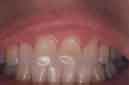
    Benefits of Root Canal Treatment
    1. Root canal treatment helps you to save the tooth.
    2. In severe type of acute pain,pain subsides immediately after cleaning of the canal

    Friday, November 27, 2009

    Cosmetic Dentistry

    S
    mile with confidence !


    You might have been to a hair dresser, a beauty salon and a fashion boutique to beautify yourself, but how many times have you visited a dentist for it?

    Yes - a dentist! We have related Dentistry only to relieving pain and disease forgetting the most crucial part in our beauty - the smile. Your smile is a key part of your unique look and personality. It’s not surprising that the world assesses your friendliness and personality by your smile. It is a key factor in your self esteem and the way you interact with others.

    If you have been refraining from smiling due to your teeth color, structure, position or shape its time to visit a dentist. There are many ways to enhance your smile and your regular dentist or a cosmetic dentist can help you through it. Many people are more interested in changing the color of their teeth than the tooth's actual shape. This is the reason why people relate cosmetic dentistry with whitening of the teeth, but cosmetic dentistry also equally concern with changing tooth shape and position. Here we lay down some corrections that your dentist can give you for a smile with confidence.

    Discoloured Teeth


    The most common correction of discolouration is through whitening. Though very popular in rest of the world, it is not widely available in Nepal. This is because of the unavailability of the new technologies used for bleaching. However, home bleaching system is pretty popular these days. Discolouration can be present in a single or in few teeth only. In these cases, crown and veneer can be made so as to mask the colour. Both of these act as a cover for the natural teeth. Crown covers the whole of the tooth surface while veneer covers only front surface of the tooth. Beaching can also be done in single tooth.

    Besides discolouration stain is also a common problem. This can be corrected in the same way as the discolouration but in minor cases scaling or composite filling is enough to remove or hide the stains.

    Abnormal Position of Teeth

    Wearing braces is another very popular dental treatment in Nepal. If you have a problem with the position and shape of teeth like rotation, crowding and gaps, they can be corrected by forcing them into desired position with the help of metal wires. These wires can be fixed or removable.

    Braces may not be a desirable choice because of the time it takes for correction and also the awkwardness one may face to show it. Simple problems like rotation, tipping can be masked by putting veneer or crown over the tooth. Porcelain crowns are stronger and look more like natural teeth. They can be made in different shades and so can exactly match the adjacent tooth colour.

    Wide gaps, especially in the front teeth can also be corrected by putting crown or composite filling.

    Surface Defects


    Surface defects like cracks, chipped teeth, erosion, fracture and cavity can be easily corrected with Composite Bonding. After preparing the teeth for bonding, the dentist uses a mild acid to condition the enamel of the tooth so the composite will adhere to it. Then the dentist applies and shapes several layers of the composite material to the proper form on the tooth, which can change both the shape and shade of your tooth. The procedure is painless and done in one or two appointments.

    Tooth Loss


    Tooth loss can be another reason for a bad smile. There are various technique to replace a lost tooth. Bridge is a common treatment for replacing missing tooth or teeth with tooth-shaped porcelain that fills the space. However it is a costly and time consuming process. Despite the time and money, it is an excellent means of replacing missing teeth.

    Implant is new and advanced technology in dentistry for replacing missing tooth but is not common in Nepal. Implant is placed(screwed) surgically in the jaw and gums. This process might be more expensive than the bridge.

    A cheaper process is a removable tooth that can be placed over the missing tooth. These teeth are made up of acrylic. While they are cheaper, they can be uncomfortable and less stronger than porcelain teeth.

    After knowing the possibilities, now you do not need to cover your mouth when you laugh or close your lips while smiling. Smile freely – as it does wonders. Just imagine how an attractive new smile could boost your confidence, improve your relationships and help you show others the real you!